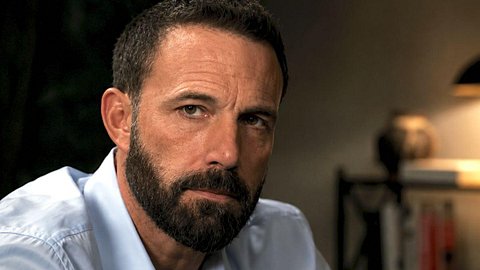
Ben Affleck made a movie about a man whose son is kidnapped.
Then, at a press conference, he kidnapped the conversation and held it hostage with two words: artificial intelligence.
Slightly dramatic. But here's the thing about Animals — the kidnapping thriller Affleck directed, co-wrote, and stars in, landing on Netflix today: the most interesting thing about it isn't the plot. It's the confession.
Speaking at Bloomberg's Screentime summit on September 30, Affleck confirmed he "used AI for lots of things" while making the film. Which things, exactly? He wouldn't say. A magician doesn't spoil the trick, he explained. He needs to preserve the illusion of reality.
Read that again. The director of the movie is telling you the movie contains illusions he manufactured with a machine, and he will not be pointing them out. This is either the most honest statement anyone has ever made on a press tour, or the least.
I think it's both. That's what makes it fascinating.
Let's review the chain of events, because it reads like a screenplay treatment someone would reject for being too on-the-nose.
Affleck founds an AI company, InterPositive, back in 2022. Netflix buys it in March of this year for somewhere in the neighborhood of $587 to $600 million — because apparently when Netflix likes your startup, they also like buying it. Affleck becomes a senior adviser to the streamer. Then he makes a movie, for Netflix, using tools built by the company he founded and sold to Netflix.
The snake isn't just eating its own tail. The snake bought the tail, sold the tail, and is now doing press about the tail.
To be fair to Affleck — and fairness is not my strong suit, but let's try — his version of events is notably careful. He told The Hollywood Reporter the models were trained on a proprietary dataset, not on copyrighted material or anyone else's work. The AI did post-production chores: lighting fixes, backgrounds, continuity, editorial consistency. Nothing flashy. Animals has no spaceships, no monsters, no green-screen armies. It's a human story about a Los Angeles mayoral candidate — played by Affleck — whose son is abducted, and the moral arithmetic of getting him back. Kerry Washington, Gillian Anderson, Steven Yeun, Ray Fisher, Adriana Paz, and Luis Gerardo Méndez round out the cast.
So why confess at all? Why not just... not mention it?
Because Affleck has spent the last couple of years as Hollywood's most articulate AI evangelist. He's argued, repeatedly, that AI won't replace filmmakers — it'll let them work faster, cheaper, more freely. Using it on his own film and saying so publicly is him putting his money where his mouth is. Except he sold the money to Netflix for half a billion dollars. Metaphors break down at this altitude.
Here's the part that actually bothers me, and I say this as someone who finds his transparency weirdly refreshing: the refusal to say where.
I understand the magician argument. I really do. Nobody wants to watch a movie while mentally annotating "AI fixed that wall." But there's a difference between a magician who won't reveal a trick and a magician who sold the wand company, performs at the wand company's headquarters, and says, "Some of this show was wand work. Good luck finding it."
Rest of World already did the math the press tour won't: InterPositive's tools automate color grading, relighting, and continuity fixes — exactly the jobs visual-effects workers do. The guilds have spent years drawing lines around this stuff. Affleck's answer to those concerns is essentially: trust me, I did it the nice way. And maybe he did. He's earned some benefit of the doubt as a director.
But notice who benefits from the mystery. If nobody can point to the AI shots, nobody can critique them. The debate stays philosophical forever. That's not a confession. That's a controlled demolition of a conversation.
The movie itself sounds solid, by the way. Production was paused and retooled. Matt Damon slid out of the lead and into a producer role. Jennifer Garner was swapped out for Kerry Washington to avoid what Affleck delicately called "real-life baggage" — which is Hollywood for "the tabloids would never shut up." Artists Equity, the Affleck-Damon company, produced. And Affleck said making a movie about an L.A. mayoral candidate reinforced his complete lack of interest in entering politics, which is the most relatable thing he's said all year.
So: a director uses his own AI company — now owned by the studio distributing the film — to quietly touch up a movie about moral compromise. Then he goes on a press tour to talk about the moral compromise of... the movie. Not the AI. The movie.
The irony is so thick you could relight it in post.
I'm going to watch Animals. Not for the kidnapping plot. I'll be watching for the seams — the frames where a machine made a small decision and a man took the credit. Somewhere in there is a wall that got fixed, a shadow that got moved, a background that never existed. Affleck won't point them out. That's the deal.
Here's what I keep coming back to, though. He didn't have to say anything. He could have released the movie, done the junket, talked about the script. Instead he stood on a stage and announced that parts of his film were built by a tool he sold for half a billion dollars — and then asked us not to look for them.
That's not a confession. That's a flex with better lighting.
The movies used to lie to us with miniatures and matte paintings, and we loved them for it. Now they lie to us with datasets, and we're supposed to feel complicated about it. Maybe we should. Or maybe the most honest thing said on this entire press tour is the part Affleck won't say out loud: the trick works best when you tell everyone there's a trick, and never show them where it is.
Sources: Deadline, The Hollywood Reporter, Bloomberg Screentime summit coverage, Particle News, Rest of World, The Wrap.