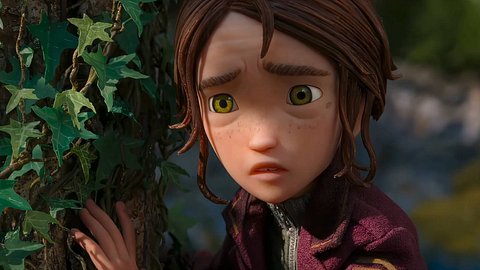
Wildwood: Laika Spent 16 Years Building This by Hand. It Shows.
Wildwood: Laika Spent 16 Years Building This by Hand. It Shows.
Wildwood: Laika Spent 16 Years Building This by Hand. It Shows.
Sixteen years.
That's how long Laika spent making Wildwood. I think about that number for a second. In that time, some studio executive somewhere probably made roughly four thousand decisions to hand beloved franchises to algorithms, and one small studio in Oregon looked at a book about crows kidnapping a baby and said: "Yes. Let's build this. With our hands. One frame at a time."
I respect the stubbornness. It borders on insanity.
The film opened today. Travis Knight — who directed Kubo and the Two Strings, then disappeared into the Transformers toy box for a while — comes back to direct the studio's most ambitious project yet: an adaptation of Colin Meloy's Wildwood Chronicles. Meloy is the Decemberists' frontman, which already explains the entire Pacific Northwest forest-goblin vibe.
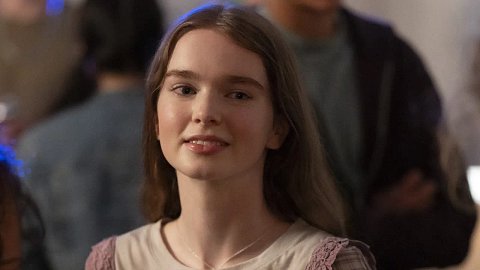
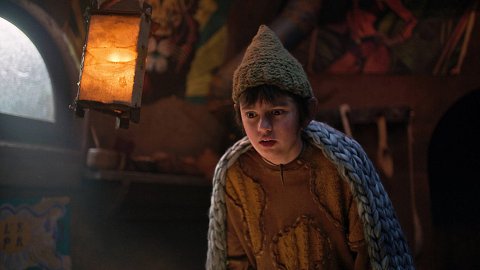
The setup is simple. Prue McKeel, a headstrong kid in Portland (played by Peyton Elizabeth Lee), watches her baby brother get carried off by a murder of crows. And yes, an actual murder of crows — the phrase stops being cute very quickly. She follows them into the Impassable Wilderness with her awkward classmate Curtis (Jacob Tremblay), and finds a hidden world of talking animals, military coyotes, bandits, giant birds of prey, and Carey Mulligan as an exiled aristocrat who might know something about the whole baby situation.
That's the plot. Here's the thing nobody warns you about: you stop seeing it as "a movie" about twenty minutes in.
Every frame is handmade. Every stitch of clothing, every feather, every leaf. The New York Times gave it 100 and wrote that it feels quietly remarkable in a world of AI and reboots — which is the polite newspaper way of saying this thing was made by human hands while everything else was assembled by prompts.
Metacritic has it at 87, universal acclaim, 96% positive. Critics who normally write "fine" about everything are using words like "astonishing" (Empire) and "once-in-a-generation" (Film Focus Online). IGN gave it a 60 — the contrarian uncle at every Thanksgiving dinner — arguing the story occasionally stumbles. Fair enough. It does wander in the middle. But complaining that a stop-motion epic's plot has some soft spots is like complaining that a handmade violin has fingerprints on it.
Here's the part I keep circling back to: the rating is PG-13, for "strong fantasy violence, bloody images, thematic material, suicide-related material, brief partial nudity and language." Read that again. This is a children's fantasy. About a kid saving her baby brother. And Laika had the nerve to make it genuinely dangerous — like the 80s classics it clearly worships. The Dark Crystal. Labyrinth. The ones that treated kids like they could handle being scared.
Somewhere there's a conference room full of people who decided all family films must be focus-grouped into smooth, frictionless content. Meanwhile in Oregon, an animator spent a week moving a puppet two millimeters at a time so a coyote soldier could blink convincingly.
I know which one I'd rather watch.
Is it perfect? No. It's long — 132 minutes — and the middle act does that sprawling-fantasy thing where factions pile up faster than you can learn their names. Mahershala Ali plays a bandit leader, which sounds like the one casting decision that required zero thought and produced a perfect result anyway.
But the ending credits carry a phrase that never appeared on Laika's previous films: "Handmade in Oregon." They never had to say it before. They do now. The world changed around them.
Sixteen years of someone's life. Moved by hand, frame by frame, into something that feels like a dream you had as a kid.
The irony, of course: Hollywood will spend the next six months trying to reverse-engineer the algorithm behind Wildwood's success. There isn't one. There's just a studio that refused to stop caring — and a reminder that some things only exist because a human being sat in a room and moved them with their hands.
Sources: Metacritic, The New York Times, Empire, IndieWire, The Hollywood Reporter, Film Focus Online, The Upcoming, Rendy Reviews